


News
Industry experts predict that China's steel industry will generate 500 million tons of solid waste annually by 2025, of which approximately 1.5%-2% will be spent refractory materials from the iron ditch system, estimating an annual output of 750,000-1 million tons. Currently, approximately 300,000 tons of spent refractory materials enter the recycling system (including both internal recycling by enterprises and public recycling), resulting in an overall recycling rate of approximately 30%-35%, significantly lower than the utilization rate of bulk solid wastes such as blast furnace slag (99.94%). Landfilling of the remaining waste leads to resource waste, increased costs, and environmental pollution. Iron ditch system refractory materials are frequently replaced (every three months, with some having a lifespan even shorter), accounting for 12% of the ironmaking process. Therefore, there is significant room for reducing refractory consumption costs in the iron ditch system.
Key technologies for the use of spent refractory materials in iron ditch systems include the following applications:
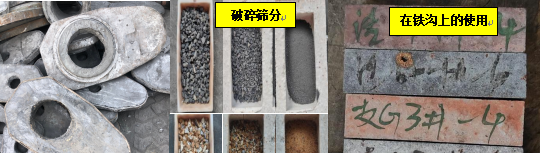
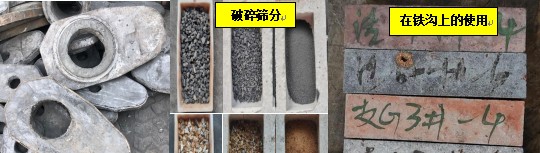
First, recycled aggregate technology. Recycled refractories (high-alumina, corundum, Al2O3-SiC-C) that have undergone crushing, screening, and grading can replace 15%-50% of virgin aggregate (bauxite clinker, brown corundum, etc.). This technology offers significant advantages: it significantly reduces raw material costs; it alleviates the depletion of natural, non-renewable mineral resources; and after high-temperature service, the material's crystals develop more completely, improving the thermal shock resistance and high-temperature volume stability of the recycled castable.
Second, matrix micronization is used. Recycled refractories with stable composition are ultra-finely ground to partially replace matrix components such as Al2O3 fine powder, optimizing the matrix microstructure and reducing material costs.
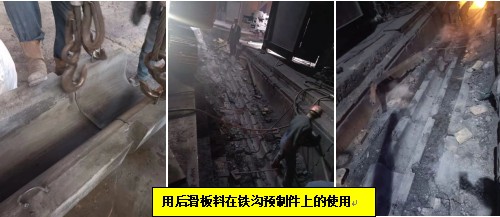
Third, functional prefabricated component manufacturing is used. Prefabricated components such as trench covers and slag weirs are manufactured using recycled aggregate as the primary raw material, enabling rapid replacement and improving service consistency.
Fourth, high-content utilization in non-working layers. Large-scale use of recycled materials in permanent layers, insulation layers, and other areas that do not directly contact molten iron achieves efficient resource recycling.
The fifth is the typical use case of Al2O3-SiC-C refractory materials as shown in the figure below.
What is the future of used refractory materials in blast furnace iron channel systems? What are the core drivers?
Experts offered the following responses: First, policies and regulations are driving this trend. The national "dual carbon" strategy is promoting the resource utilization of industrial solid waste; environmental protection taxes and mineral resource taxes are forcing businesses to transform.
Second, it emphasizes full lifecycle economic benefits. This can reduce the overall cost of refractory materials in the iron channel by ≥30%, reduce the storage and disposal costs of spent refractory materials, and establish a closed value loop within the "recycling-processing-regeneration" industry chain.
Third, it achieves breakthroughs in technological maturity. For example, spectral component recognition technology improves scrap sorting accuracy; hot and cold treatment processes are standardized; secondary mullite reaction control technology in the regeneration formula is optimized; an intelligent sorting system utilizes X-ray fluorescence (XRF) + AI image recognition technology, achieving a 99.2% separation accuracy for metallic/non-metallic impurities; and micropowder activation technology uses a mechanochemical method to produce nano-sized recycled powder (d50 ≤ 1.2μm), increasing the specific surface area to 8.5m²/g.
Fourth, it provides reliable guarantees for strategic resource security. This means alleviating supply risks for strategic resources such as high-grade bauxite and fused corundum.
What are the key challenges facing the application of spent refractory materials in blast furnace iron channel systems? What technical countermeasures should be adopted?
Experts responded to this question as follows: First, quality control of recycled materials is difficult. The technical bottleneck is that low-melting-point impurities such as ZnO and K₂O affect slag corrosion resistance.
The following solutions can be adopted to address these issues: First, establish a source traceability system; develop impurity ion capture technology; and implement a gradient blending application strategy.
Second, there is a lack of a standardized system. The industry's pain point is the lack of control indicators for the phase composition of recycled aggregates and service performance evaluation criteria. A path to breakthrough is the development of YB/T standards to regulate the grading and application boundaries of recycled aggregates.
Third, there are obstacles to industrialization and promotion. First, there are cognitive limitations: some companies worry that recycled aggregates will affect the iron quality and life of the iron channel.
Second, there is a collaborative mechanism: actively establish a data sharing system among steel mills, refractory companies, and recycling platforms; and establish a 10,000-ton demonstration production line.
In short, the application of spent refractory materials in iron channels has formed a complete technical route. Future development will move towards higher blending levels (>50%), functionalized recycled prefabricated parts, intelligent full-process management and control, and standardized certification, becoming an indispensable component of green metallurgy.
information center
- ▶ Focus on September 3! Tiananmen Square's new layout for the Victory Day commemoration: an upgraded viewing experience and rich symbolism.
- ▶ The application technology of used refractory materials in iron trough has a bright future
- ▶ Huang Runqiu, Minister of Ecology and Environment: Steel mills that have undergone ultra-low emission transformation are no longer what they used to be.
- ▶ The non-ferrous metals industry saw steady growth in profitability in the first half of the year
- ▶ US expands 50% tariffs on steel and aluminum imports
- ▶ 2025 Cold Rolled Strip Technology Exchange Conference was successfully held
Message